Pray to the Moon when She is round,
Luck with you will then abound,
What you seek for shall be found
On the sea or solid ground.
Showing posts with label Wicca. Show all posts

Monday, December 31, 2012

Catch a Charlatan by the Toe... Then What?


Ena, mena, mona, mite,
Bascalora, bora, bite,
Hugga, bucca, bau,
Eggs, butter, cheese, bread.
Stick, stock, stone dead - OUT*


The Charlatan, GiGiovanni Domenico Tiepolo (1727 - 1804).
Image courtesy Wikimedia Commons
In general, I try to remember that my goal here is to create a record of my/our/family spiritual thoughts & activities for future printing & binding -- for posterity. Every now & again, however, I need to use this corner of the ether to get some much needed feedback. This is one of those times.

Being an ear to some sticky political jockeying on the part of a few friends, I became privy to what some might (& certainly some do) consider damning intel about a member of our community. The story, as carefully as I can tell it is thus: 

In the process of collaborating on a (Wiccan) public rite, some feathers were ruffled over unconventional ideas. Words were exchanged & it began to appear that discomfort over ritual elements arose from one or more of these issues: 1) non-traditional methods, 2) disregard for hierarchy, or 3) inexperience/"stage fright" on the part of some participants. My friends were nonplussed & many calls were made, not only to myself, but to various leaders in other parts of the country, etc. 
Of course, none of this concerns me directly, I simply played sounding board for their confusion & concerns. BUT. Then, in a genuine effort to understand the background of one of the people involved (the primary source of complaints), we made some inquiries... I must give credit where credit is due & say that it was clever Hubby who found the relevant & controversial information I will gingerly describe below. 
The facts: There is a member of our community who claims many high degrees, including a doctorate, initiation in a pedigreed tradition & multiple ordinations. This person charges money for classes & services on the basis of these credentials. However, it has become clear that the "degree" & the ordinations were obtained from online websites where "you can be ordained right now for free, and be still able to practice your own religious traditions by simply clicking the button below" & you can obtain a "Doctor of Philosophy (for a) $55.00 donation." This strips this person's viable credentials down to a vague assertion of initiation into an unnamed tradition which has been only described as "Buckland's Blue Book to the letter"... & perhaps it literally is "Buckland's Blue Book" to the letter...
Now all this makes me chuckle except for the fact that this particular person is giving people headaches over not wanting to do things that are "beneath them" (since when is serving the gods beneath anyone?) & grousing about how "hard (they) have worked" to attain their lofty status. Worse still, a friend of mine confided the other day that she has been receiving (I presume, for a fee) instruction from the aforementioned person of dubious credential...
charlatan |ˈ sh ärlətən; ˈ sh ärlətn|nounperson falsely claiming to have a special knowledge or skill; a fraud. See note at quack .

This brings me to the crux of the issue. It's a two-part problem. 

  1. One of my friends feels that the charlatan needs to be called out before the community, for community's sake -- particularly since this person provides "counseling" (for a fee) without any indication of training/expertise in this field. My friend's hope is that once people know the truth, folks will still collaborate with the outed-charlatan, being supportive, inclusive & recognizing that regardless of this person's questionable background, they still have something worthwhile to bring to the table. I am not sure I see it working out that way, but it's a nice idea. The question is, is it worth it?
  2. The more important issue (for me) is this: Do I tell my friend -- the student of said charlatan -- what I know? If I do, how do I broach this subject with delicacy & compassion without placing her on the defensive or making her feel like I am judging her efforts? What if she is gaining great things from this teacher? Do I risk needlessly botching a good teacher/student dynamic by telling her this information? People learn & grow from all kinds of diverse sources & experiences --  I cannot judge what will be helpful & productive for her. Perhaps I should leave it alone.
My final dilemma is this: What if the charlatan isn't really a charlatan, but rather a real phony?
"She's a real phony. You know why? Because she honestly believes all this phony junk that she believes." -- O.J. Berman, Breakfast at Tiffany's

Magnetiseur: Dessin humoristique représentant
un charlatan mesmérien, 1780. @ WikiCommons.
What if our charlatan honestly believes all this phony junk? What if they believe that they are changing the world, moving mountains, healing the planet, serving the goddess? If this person "has their heart in the right place" as they say, is bringing attention to all this information counterproductive? What if it fragments the already fragmented community? 

If you have seen this before in your community, or if you have any thoughts, comments, ideas, similar experiences to share, please post them below (anonymously if you like). If you prefer, email me at momafauna (at) gmail (dot) com. Oh, please share it with wise & foolish friends too! I'm accepting counsel from all corners -- degreed grand poohbahs, ordained nothing-of-its, fully licensed quacks, paupers, proletariats, high masters of nothingness, neophytes & if you talk to fungi... well then, I will take special heed. 


*Cornish version of "Eeny Meeny Miney Moe" recorded by Fred Jago in The Glossary of the Cornish Dialect, 1882.

Friday, November 23, 2012

Tree Huggers & Temple People or... How Does Space Feed the Spirit?

Rustic pulpit, March 16th, 1879, from the Robert N. Dennis collection of stereoscopic views @ Wikicommons.
Rustic pulpit, March 16th, 1879, from the Robert N. Dennis collection of stereoscopic views @ Wikicommons.
Quite possibly the only churchy-indoor-space that might compel me to darken its doorstep.


We have been moving, again. I do believe we have reached a frequency of moving that qualifies as absurd. Or completely mad. Or something. This time, the distance is short & very hopefully permanent -- as far as Alaska goes. Please knock on a tree, table, pressboard, masonite now, please.

There was much damage control to be done in the new unit & much demolition & rebuilding & remodeling has happened. We retire every evening exhausted & tense, but with increasing hope that this has a conclusion which is nearing ever closer with each strenuous day. Now that the grunt work has significantly abated, our efforts have turned to squeezing as much swank into each square foot as humanly possible. This is the part of the process that has gotten me thinking -- thinking about space...

When I talk to other pagan folk about "sacred" spaces & places, it always seems that they fall into one or the other side of the indoor/outdoor dichotomy. This is one of those subjects where people seem to have strong feelings. The Druids ("Oh, those Druids...") pretty universally go outside. Alaskan Druids don't seem to care if its so cold outside that it hurts to breathe. Out they go. In corresponding with other animists, it sure seems like we also have that tendency, often struggling with issues over being house-bound. On the other hand, my Thelemite cohorts prefer to be indoors, or so it seems for the most of them. Then again, Thelema has all those specifications & rules for worship which seem to require a dedicated indoor space. Wiccans, ("Oh, those Wiccans...") seem to be the most plastic about space, but perhaps this is because their "sacred space" is created by circle-casting. As individuals however, they do seem to have strong personal tendencies, for example, the High Priest; he prefers indoors, period. But, we all know the hedgewitch-types who prefer the outdoors. 

This brings me to my quandary: How does space feed the spirit? More specifically, as I look ahead to the coming months of intensive indoor dwelling, I wonder how can we design/create indoor space that inspires & nourishes the soul (in particular, of the outdoors-oriented worshipper), a place where I won't spend quite so much time gazing longingly out the window at the Darkness?

I have been trying to remember the time before the altar-altering mushroom incident when I worked to create "sacred spaces" indoors, trying to remember the thoughts in an old book I have stored away in the desert house entitled, A Home for the Soul, trying to remember what it was about certain small Mexican churches my mother & I visited in Albuquerque, trying to grasp what gives the niches & meditation spaces on temple grounds of the Rosicruscian Order, AMORC their set apart, otherworldly, "sacred" feeling.  What is it that transforms a people-space & imbues it with a sense of spiritual significance?

I am thinking it is, to a large extent, art.

But not entirely because the range of human "sacred spaces" stretches from the the most baroque, rococo cathedrals, to the "rustic pulpit" pictured above, to the streamlined simplicity of a reflecting pool. Art is part of this, but not the all of it. So, what is it? What are the cues that tell us a people-place is hallowed, "spiritual" or "sacred"? What is it that whispers to our subconscious, "This place is special, pause a moment & feed your soul..."? This, I would like to understand.


Tuesday, November 6, 2012

Setting Aside (but not sacking) Samhain


As I grow older, I see the overlap of Samhain & my day of birth as functioning to draw my attention to the frailty & impermanence of the fleshworld; of my own flesh & bones, as well as those of others. So much is made of ancestor veneration & the "beloved dead," but I find that the mental act of ticking off another year on a day reserved for honouring endings puts a different spin on "Happy Birthday." There are several other factors which stymie my Samhain spirit & I have been giving all of it careful consideration this year (while successfully avoiding the emotional pitfalls of last year). I feel I am reaching some conclusions & possibly some new directions.


All Hallow's Lanterns 2012
All Hallow's Lanterns 2012.
Folks make much ado about Samhain & I confess that although I have always been enchanted by its mystique, there has always been something about it that eludes me. Last year, I grappled with Samhain more than ever before. During a planning meeting for our community Samhain celebrations, I had commented to another committee member that I had difficulty with the dumb supper & other more "ghostly" rites because I lean toward the concept of rapid spiritual recycling. To my surprise & relief, she said she also leans that way. (She is Hindu & a member of a rare sect of Hinduism of which I know nothing, nor did she elaborate.) In general, I just don't think the spiritual remnants of the deceased hang around all that long. I'm am open to the possibility that there are those individuals who will linger about for one reason or another, but I think the bulk of us just jump right back into the pool for another go-'round. Reincarnation, wheels turning, webs weaving, 'round & 'round we go, where we end up, we never know…

This is one of those inconsistencies in Wicca that has always bothered me. On the one hand, Wiccans generally subscribe to the concept of reincarnation, yet they also assert that the "beloved dead" can join the table at a Samhain rite. If, after death, we "return to the cauldron" how can this be? How do the dead make it to dinner?

Besides, I'm not convinced that my ancestors & departed loved ones would really appreciate or understand being honored in that fashion -- in ways that are not their own -- in contexts strange & woo-ey.

A few weeks ago I purchased a children's book about the Day of the Dead. Of all of us, I think I love the book best, but the Changeling likes it very much too & he walks about, shoving it into laps & faces insistently repeating, "Dedd! Dedd! Dedd!" What I like most about the book is that it captures the celebration of family & departed loved ones in a way that makes all the trappings & activities make sense. Being written for children, it tells about the rituals & rites without attempting to put on airs or create a mystery. It's Boo-Woo free. This children's book gave me a clearer, deeper understanding of the Day of the Dead than any other source I have previously encountered & I believe it was precisely because it was written for children. Honesty; no spin, no frills.

Pages from "Day of the Dead," by Tony Johnston & Jeanette Winter.

In addition to helping me understand the holiday & it's traditions, the book revealed something unintentional. One of my major stumbling blocks to ancestor veneration & honoring the dead is the lack of physical access to their remains. I cannot go to my humans' bones. In the book, the families process -- with all their parcels & flowerpetals & candles -- to the churchyard where their loved ones are buried. As a modern citizen of the U.S., my ancestors & deceased loved ones' burial sites are scattered all over the land. There is no close knit, ancestral burial ground to which we can process, no neighborhood churchyard at which we can celebrate, no village graveyard in which to visit & remember.

A Samhain Season Moonrise.
If we cannot cherish, honor & reminisce among their bones, if their spirits are already far flung, riding the Wheel elsewhere… then how? Where? What do we do to connect to & commemorate then? I have no answer to this. None. I am a creature tied to the corporeal & also to place -- I recognize this about myself & I believe my children are very much the same. How do we work with these limitations? I have considered looking more carefully at the Shinto traditions, but, as in so many of the older traditions, the ancestors are tied to the land. With ancestors untied from the land, how can we make Samhain make sense?

Then, there's the harvest side of Samhain. I have not the time nor inclination to discuss this at length (mostly, because life has become very complicated). Instead, I will make a short note: Agriculture is very limited in Alaska & so completely over by the end of October that it is a moot point. Additionally, I have many misgivings about celebrating agriculture (I will not expatiate here, except to point to modern agriculture as the root of most of our current ecological problems). Some say Samhain is the first frost. My bioregional self really likes that, but the first frost sometimes arrives in September & that's just awkward. Samhain in it's guise as the final harvest festival is equally problematic -- not quite satisfying or even making sense. I question our motives. Are we just celebrating this day because everyone else is doing it?

My conclusion for now is to ask the ancestors for input (or not) & give Samhain a break. 

An oversized Amanita Muscaria... Our fruits sure don't fall far from the tree.
An oversized Amanita Muscaria...
Our fruits sure don't fall far from the tree.
There are no losses here, however. Our children love All Hallow's Eve/Halloween & as a child of that day, I do too. We can continue to embrace All Hallow's & all the delights of the Halloween traditions while exploring the customs of the Day of the Dead & working out this quandary of remembrance. Of course, little things like the annual Samhain tarot spread will remain &as of this year, we are beginning a new tradition of ceremonially seeing in the month of November. 

November: our month of preserving/preparing our foraged foods. This Hallow's Eve we started up our first batch of wild-harvested black-currant liqueur, baked a tray of chocolate malt biscotti (to be vacuum-sealed & preserved for holiday gifting) & set up a couple litres for vanilla infused vodka (makes a great drink & also works in baking as an extract). So, setting aside Samhain (for now), we shift to an ushering-in of hunkering-down. Like squirrels. Or something.

November 2012 Infusions. (left to right: organic strawberry, wild black currant, vanilla bean, wild highbush cranberry)
November 2012 Infusions.
(left to right: organic strawberry, wild black currant, vanilla bean, wild highbush cranberry)

Thursday, October 4, 2012

Harvest Moon: Woo-Woo in the Hood

I observed the most recent Harvest Moon esbat by attending a belated Mabon event hosted by an open eclectic Wiccan circle. I had many misgivings about this, not the least of which was its timing with the Moon's fullest night. It was hosted in a neighborhood that few would list among Anchorage's finest. This also gave me some misgivings, mostly because I always have my doubts about ceremony in densely people-populated places. Below is a stream-of-consciousness memory of the evening's happenings & lessons learned. For myself, for the files.


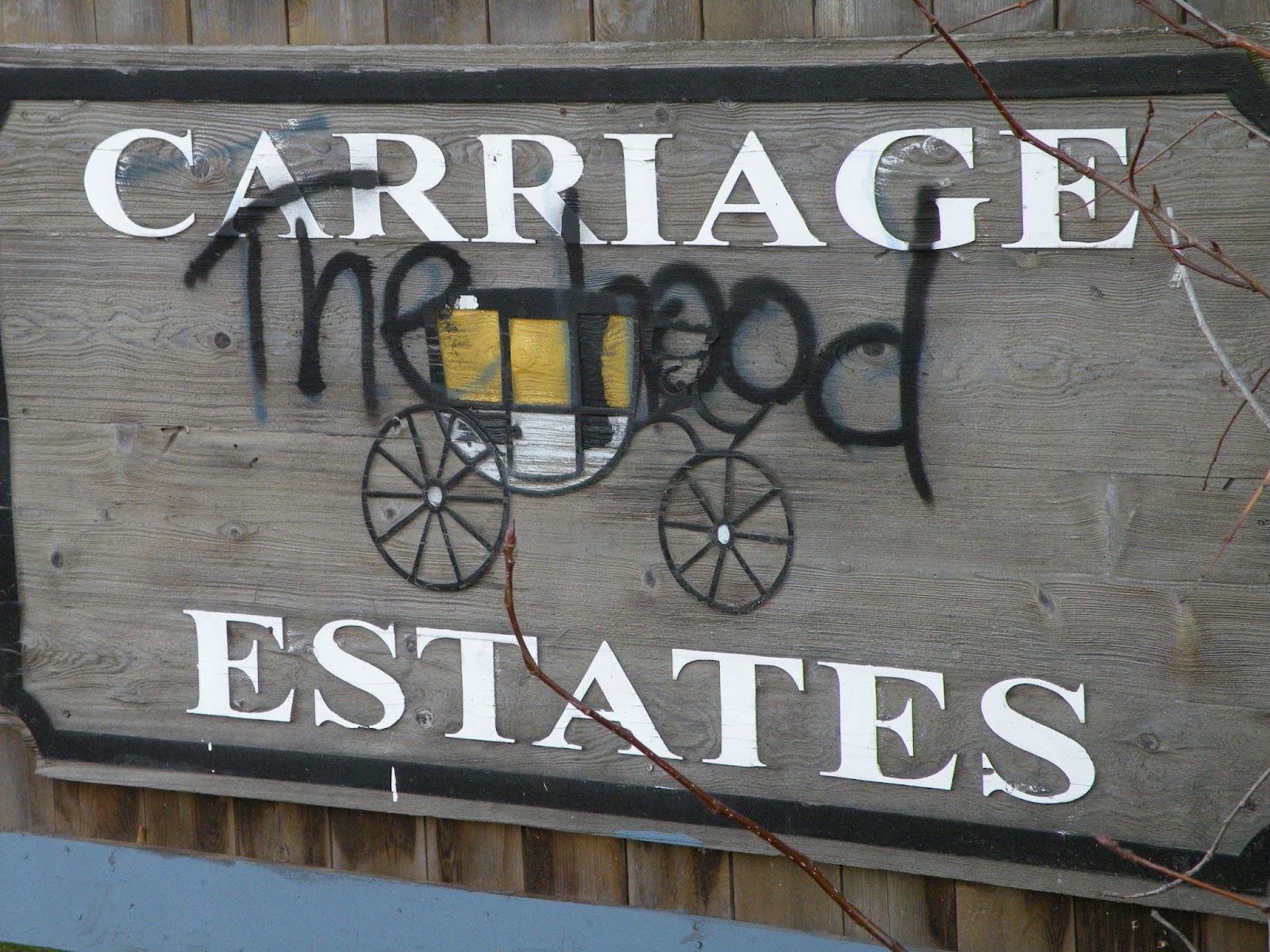
Welcome to The Hood, let's share some Woo!


Before I begin, a note on Woo: "Woo-woo" or simply, "Woo" has become something of a double entendre for me of late. For many years I have used it as a mild pejorative for the pomp & pageantry characteristic of some pagan traditions. More recently, it has come to refer to the ethers & sensations that come with listening, making spiritual contact, walking between the worlds, or something. This makes for a peculiar juxtaposition of meanings since the first would be used to point out posturing, or a sense of theatre, while the other points to something quite real, but utterly unprovable. Interestingly, both are entirely subjective. Both are also entirely apropos for this particular story. 

September 29, 2012: Harvest Moon/Mabon Circle

I receive a slightly frantic telephone call from the High Priest concerning wine & cranberry juice & sacrilege & I think to myself, "So this is how it will be..."
Later, riding in his rattling truck, I listen to him explaining foibles, many of which I no longer remember... but feast first? Really? He thinks this is good because he can drink wine beforehand. He never drinks before a rite. 
He tells me, "...the place this is happening is really in the hood. It's tiny. I've seen small zero-lot-lines, but this place is the smallest I have ever seen. It's gonna be something..." I think to myself, "...small, crowded, densely peopled... how does this leave room for the Spirits?" Yes. It will be something.
As we turn into the housing development, a sign welcomes us to "the hood." Honesty. I recall finding that strangely reassuring.
We arrive at the tiny sardine-can townhouse, brimming with people. The neighborhood is assembled of so many similar people-places packed like lemmings on cluttered, sinuous streets. Postage stamp backyards are boxed in by ramshackle fences only alluding to privacy. It is strangely communal, the neighborhood where sounds of music & powertools & teenagers dominate the air. Very busy, very public. Secrets are few, keeping up appearances, a waste of time.
I take a moment to acquaint myself with the ritual site, a diminutive backyard with fallen fences. The neighbors are repairing the fence to the North -- hammers, hip-hop & skillsaw working together to restore the thin illusion of separateness.
I remember wondering "How will this work? Mabon to pop music..." 
The ritual space has already been set up, little folding table altars in the quarters, a larger table in the centre. It is chilly & snow lingers on the lawn on the North side of the South fence, clinging to sustaining shadows. As I tend my doubts, I notice a few frozen fungi, kicked over in the grass & upon further inspection, note that the circle has been -- unknowingly, no doubt -- set over a fairy ring. In fact, the entire miniature yard is demarcated by this fungal circle. "Oh, you. You guys really are everywhere, aren't you?" Satisfied, I return to the warmth & conviviality of the people-house.
Food is plentiful & rich, but I eat sparingly. Despite my misgivings about supping before ritual, I succumb to a large wedge of fresh-baked potato bread & a thick slab of Irish butter alongside a wonderful cup of bean & moose soup prepared by the huntress herself. A salad of dark greens with beets follows & finally, a glass of red zinfandel. Everything is different, but not unpleasant.
The rite is delayed. We are waiting for bacon. There is much confusion. Bewildered murmurs abound, "Why do they need bacon? I have never been to a rite that used bacon..." Bacon turns out to be the High Priestess's son's friend. Bacon is not yet in the house.
Even when Bacon arrives, we wait. The neighbors are still working on the fence like frenzied wasps & someone makes the call to hold off until nightfall...
In the cramped but cozy kitchen, we discuss fencing, herbalism, community, Alaska, the Moon. To my utter disbelief, I learn that no one else in the room is aware that the Moon is full tonight. What? Really? Perhaps these Wiccans, Witches, are not about the Moon the way I am? Maybe this is why I fought back the urge to correct someone who casually referred to me as "Wiccan." For the sake of maintaining a pleasant course of discussion, I opted not to correct her. But even now, I yearn to make that clarification. Why so strong?
The time for the rite finally arrives & we process into the now frost-glittered yard. Fancy ladies in sheer black dresses & strappy shoes -- I wonder how they will fare. I am warm under a thick, blue cocoon. Some hours earlier, when it was still afternoon, the High Priest had handed me his heavy, wool & velvet cloak, a striking azure. I said to myself, "He thinks I am Water..." 
Circle is cast, space is set, quarters are called, invocations made... all the perambulations that make Wiccan ritual what it is. There is whispering, laughing & a cheerful sense of reverence without solemnity. I am still tuned into the neighborhood & I find myself distracted by people on the street, by floodlights, by the neighbor's dining room lamp & silhouettes. On. Off. On. Off, as they watch out the window. Are they trying to get the best view?
The Moon is rising from behind the hedgerow of houses over my shoulder. She can be seen by some members of the circle already. I cannot help but feel a bit of envy & scold myself for not securing a station in the West. Like Water.
Words are spoken, many of them very wise & I gain a different view of persons I have only just begun to know...
A flock of Canadian Geese interrupts, passing overhead & everything pauses as we gaze skyward, all smiles at the elegance above. The falconer at my side whispers surreptitiously, "Oh, to have my hawk right now..."
I am still feeling a disconnect from this circle (circus?) when I remember the fairy ring -- mycelia underfoot. I look over my shoulder & there She is. They are raising an enormous bowl of Water Moon-ward & uttering reverential things. The crystal reflects Her glow. Moon...Water... Mushrooms...
Unthinking, perhaps imprudent, I become conduit.
Lacking the skills to manage the connection properly, I focus further on the weblike, spidery network meeting my feet at the grassline. I focus on Moon-over-shoulder. My body reacts with a force I can only weakly mitigate. Woo.
The Water is moving around the circle now, flames extinguish in its path. I am weak & sick & my heart races with frightening ferocity. I am weighed down by the heaviest cloak on Earth... or is its stiff fabric holding me up? 
I am developing a creeping fear of this force that runs through me -- neither good nor bad, but simply unchecked. Alarm whips at my racehorse heart. Will I faint? What if my heart cannot maintain this pace?
Somewhere in the meanderings of my panic-striken mind, it occurs to me this is a stationary rite. It is characteristically stifled like most new-pagan ceremony -- why always so still? Something more primal would allow me to do something -- I could dance or rock this off. But unmoving, how, where do I direct it?
Calmness, composure. 
The cloak is so heavy. 
I close my eyes & wait...
& breathe
& hope.
Then, the Water is before me.
"Tears of the gods. May you be blessed."
Releasing the words is like opening a pressure valve & I feel a wild surge leaving me -- leaving me relieved, relaxing into a new circle.
My heart calms. My eyes open.
This is a new neighborhood, a new ecosystem, with the Moon over my shoulder & the mycelia beneath my feet & people-creatures dwelling in closely-packed nests. They walk in the night & create their own lights. I can hear them breathing. This place is alive, as alive as my forests, as alive as my desert & like them both, it has a place for mushrooms & Lady Moon. 
The rite continues in this new circle. There is more laughter, silliness even. People are cold. I see the frost on the altar leaves twinkling, resplendent in the candle light. I think it might be the most beautiful thing I have ever seen.
We linger in the kitchen after the rite. More honest, hopeful talk. I consider the Wicca. Here, in their own element, I see a very different culture from that of my more Druidically dominated community. Thinking about this, I realize that I always feel as though I am walking between worlds. Spirit-worlds, people-worlds, are they different?

Feral paparazzi-ethnographer, animist free-agent. I walk among the traditions. I can do this, as long as I have Lady Moon to guide me & mycelia at my feet.

On the road home, I do not mention these happenings to my High Priest guide. That conversation will be saved for a later date.


Thursday, September 20, 2012

The Trouble with Dreamwork (or, My Broken Magick… & Ego)


This post has been decidedly uncomfortable for me to write & has taken several weeks, but if you have ever wondered what happened to the "Spiritual Warfare" cleanup campaign


Sometimes we get stuck.

Last Autumn I was participating in a series of pathworking meditations which had a profound impact on my ability to effectively use the dream incubation technique in my "Hatred Remediation" project. At the time, however, I did not realize this. When I look back on my posts in October & November of last year, I can see that I was on fire. Or something. 

When I migrated South, I found my dreamwork abilities waning, waning, waning... I thought at that time that this had something to do with the season -- it was winter after all & the mycelia, like many other life forms are at rest, in stasis, sleeping. So I gave myself a little bit of slack & figured I would pick it up again when the weather was more accommodating...

When I found the fungi popping up early Spring, high-desert-style, I thought this heralded a change on the horizon… no.

When I returned to Alaska & found fungi the very first time we hit he trails I thought, "Let the dreamwork begin!" … no.

Utterly broken Coprinus(?)
Somewhere around Summer Solstice I came to terms with my broken magick. Broken, broken, utterly. Intuitively, I reached into my bag of tricks & pulled out the sympathetic magic. I declared to Hubby, "This is how I am going to do it from now on. I can't do the dreamwork anymore. Besides, it's more creative & fun this way, right?" Right?

I went ahead & completed two more of my remediation projects using some original sympathetic techniques. I even received assistance from a few other people. But somewhere in the back of my mind I was mulling over & lamenting the loss of what I shall call my "subscription" to that "channel" that felt lost to me. I liken it to having rabbit ears on a television. You swivel that contraption round & round, antennae akimbo until you finally capture that special signal. Ah! Then you will do everything in your power to keep that position locked into place; duct tape, stacks of books, strategically placed houseplants. But inevitably, the cat decides a new perch is in order & poof! Bye bye special signal, auf wiedersehen sacred programming, ciao my precious channel.

I can't really blame it on the cats this time. The children, maybe.

I still have yet to write about those two workings -- now nearly three months completed -- despite the fact that they really were quite clever. This is probably because I have been feeling deflated. Or not on fire anymore. Just kind of soggy. (Which one might think would be good for a mycophile…) 

I have not bothered to pursue any further mushroomy-workings. 

Instead, I performed a 180 & appealed (much to my ego's chagrin) to the Wiccan High Priest who had been sharing his late High Priestess's meditations with the community. The short story is that I have now attended a group class, some private meetings & a circle thus far. I also have a daily 'anointing ritual' which is specifically intended to liberate my intuition. It is all somewhat humbling & awkward & the decision has surprised more than a few people who know me. It is also remarkably comfortable. Like putting on an old pair of jeans. I know that system -- I have lived it. Even if I cannot abide by the label any longer, Wicca is as familiar as my native tongue. It only makes sense to return to it, even feral & changed as I am, to recalibrate my antenna, to remember how to listen.

Miniature poppy in the greenhouse.
I also decided to appeal to Morpheus. I generally keep my relationship with deity very private -- I believe such relationships should not be discussed casually, publicly, idly. My reason for mentioning this here is because the results have been important to my dreamwork recovery. I had to initiate this connection from scratch because there is no information regarding how Morpheus was formally worshipped (though of course the assumption is that he was because of the presence of dream temples). So, I determined that I would just begin with visions of Him -- the way I would incubate a dream, at night just before falling asleep, entreating his help, offering to return His favour with favour, etc... 

Poppies on the porch.
I have some things I must do now involving shrines & poppy gardening & while my rational self balks, I cannot deny that I have begun to remember my dreams again.

So I continue to lick my wounded self-image & nurture the flame that resides within. I don't like asking for help, but sometimes, it becomes an imperative. We'll fix it together. The whole motley lot of us; my gaggle of fungi, a very generous High Priest, beloved Morpheus & me. Now that's the stuff of dreams. Or something.

  
Getting un-stuck: Collecting poppy pods throughout Alaska.
Getting un-stuck: Gathering poppy pods throughout Alaska.


Monday, April 16, 2012

Animist Navel-Gazing, Thinking Out Loud, or Animism... What the Helvella?

As I more carefully examine my principles of belief, I find the process of writing out my thoughts very instructive. The following entry is just that; part of a chronicle, a piecing-together of ideas as I strive to make sense of my beliefs, since no one else can or will write them for me... nor would I want them to.

It was not long ago (a few years perhaps) that I still clung to the term "Wicca" to describe my system of beliefs, despite the fact that there are elements of Wicca that I was never able to fully embrace. I still consider Wicca a religion filled with beauty & life-affirming values -- a piece of me is very much Wiccan at heart. However, somewhere along the way, I felt I was being dishonest when I used the term to describe my personal spiritual system. This is when I really began looking at what moves me, inspires me, causes me to reel with sublime wonderment.

It was a bit like feeling about in the dark (or freefalling in an antigravity chamber), desperately grasping at words I've never used. Then, I had this weird epiphany while exercising. (Isn't it peculiar how exercise does that?) I was thinking about a tagline for this blog, something to describe myself. I had asked myself, "What is most important about you?" The words mother, mycophile & animist bubbled to the surface of my psyche, all together, all at once, quite to my surprise. Animist? Really? I jotted it on a scrap of paper & later, despite my lack of certainty about "animist," used it as the tagline. Yet, I never once sought clarification. Intuitively, it seemed "right" & I was satisfied with that.

Despite a sizable Pagan & "occult" book collection, I still do not own a single book on animism. I also have not had any significant contact with any other animists, nor have I read much of the online literature. A handful of academic journal articles are the extent of my exposure to the subject & those were read in order to piece together the following entry.* I believe I have avoided external input for several reasons, the most important being that I have not wanted to be influenced by what other people think or say animism is, or how it should be "practiced." I do what I do because it seems right.

I was startled to find that my "innate" or "intuitive" animism corresponded very closely with the concepts & ideas discussed in the articles I read. How strange, how basic animism is... all around the world, it looks very much the same. I find this fascinating. Someday -- when I am ready -- I will collect some books & see just what animism is looking like here, there & everywhere else. Until then, I will continue this process of independent exploration, talking to myself, the fungi, the gods, the ether... anyone else who cares to listen... (& better still, respond).

All quotes below cite the original sources, but most I encountered in journal articles available online... Just in case there is a stickler in the house.


What is animism?


"Everything about the (animistic) system is founded on the conviction that home is already Eden." -- Hugh Brody

This animist's view of the universe.


Derived from the Latin word anima, which means "life," "soul" or "breath," animism recognizes Spirits & a Spirit World inherent in our physical world. Animists attribute a soul to life-forms, inanimate objects & natural phenomena. To label animism as primal or primitive might be accurate to some degree, but it is also organic, intrinsic, grounded. Animism, at its most basic, is a mode of thought:

"...animism is nothing less than the fundamental mode by which human consciousness regards the world. Consciousness just is animistic. And this perspective is a consequence of human evolutionary history." 1
"...animism may be described (not defined) as the taproot which sinks deepest in racial human experience and continues its cellular and fibrous structure in the tree-trunk of modern conviction." 2


Animism does not demand complex theologies, execution of rote ceremony, or intricate cosmologies to explain the universe. It is rooted in a very basic, instinctual reverence for, understanding of & connectivity within our world. It is the process of being at home, right where we are & participating in relationships with other sentient beings that make up the Great Web that is our environment, our universe. In this form, animism can be seen as a lifestyle, way of life or, if you prefer, "lifeway":

"Animism is the attempt to live respectfully as members of the diverse community of living persons (only some of whom are human) which we call the world or cosmos." 3


Animism by nature is not a religion. However, animistic thinking & lifeways can be extended to interpret, understand & ultimately interface with that which the practitioner values as sacred. Animism, in this usage, could be defined as a spiritual practice. For the most part, this is how I employ it in my writings -- for me, thought & lifeway are inseparable from spiritual practice. Other animists will differ in their interpretation, approach, usage & that is completely natural -- animism is about relationships & relationships are very individual & very personal. 

Thus far, I have found a couple of common threads in animistic spiritual practices (beyond the obvious relationship stuff); a land-based ethic, an emphasis on the value of dreams & the "performance of worshipful acts," (i.e., reverence) towards entities, animate, or inanimate. 4 It seems likely that there could be more, but given the global diversity of animistic cultures & belief systems, the task of sorting these out seems monumental. 

Animistic thought has been suppressed by centuries of objectivity & rationalism, but because it is the underlying mode of human thought, it remains in the recesses of our minds & it can be reclaimed, recovered, rescued out from under the constraints of 'modern thought.'

"We were all animistic children once, and for most of human evolutionary history would have grown into animistic adults. Animism is therefore spontaneous, the 'natural' way of thinking for humans, and it requires sustained, prolonged and pervasive socialization to 'overwrite' animistic thinking with the rationalistic objectivity typical of the modern world. It is learned objectivity that creates alienation - humans are no longer embedded in a world of social relations but become estranged, adrift in a world of indifferent things." 5

I am among those humans who never had this mode spontaneous entirely quelled by objectivism. For this I am deeply grateful, but it also often causes me to feel just a little weird & ironically, a little alienated (from other humans, at least). The rewards still outweigh the disadvantages so I continue along this route, seeking more opportunities to revel in the animist experience & to recover that which I have lost.

"Opening up begins with listening. To learn to listen, however, is a long process... Once we have learned to hear, then, we can begin to understand. And only after we understand do we begin to speak, to intervene." 6


Some methods for reclaiming animism are fairly simple, others present complex logistical challenges. They all basically require some kind of active disengagement from our Western cultural & social status quo -- those systems that perpetuate rational thought. 

Among the many viable approaches to reclamation are: solitude, leisure, unstructured time, direct contact with nature, disinhibition & altered states of consciousness. While some of these methods are shared with Shamanic traditions, animism cannot be equated with Shamanism (I understand some animistic customs may require a Shaman, however). 

I'm pretty good at disengaging. I also have the luxury of being able to do so. I guess this might be one reason (beyond the obvious) why animism works for me. The real challenge for me personally, is finding ways to knit Sciento-reverence & animistic thought together without compromising the strength, integrity or beauty of either ideological thread. There is no reason for them to exist at odds, yet we are trained to view them as mutually exclusive. It makes for a knotty task, but what a magickal web it shall weave. 


"It's not about you.
It isn't without you.
There is only one world. We live in it together."   
-- Graham Harvey


1  The Other Side of Eden: Hunters, Farmers, and the Shaping of the World by Hugh Brody, Faber, 2002.
Animism: Or, Thought Currents of Primitive Peoples by George William Gilbert, Classic Books, 2010.
3  Animism: Respecting the Living World by Graham Harvey, Columbia University Press, 2005.
Animism, the Seed of Religion by Edward Clodd, Bibliolife, 2010.
5, 7 Alienation, Neo-shamanism and Recovered Animism by Bruce G Charlton MD, Medical Hypotheses, 2002.
The Earth Path by Starhawk, Harper Collins, 2004.

Related Posts Plugin for WordPress, Blogger...